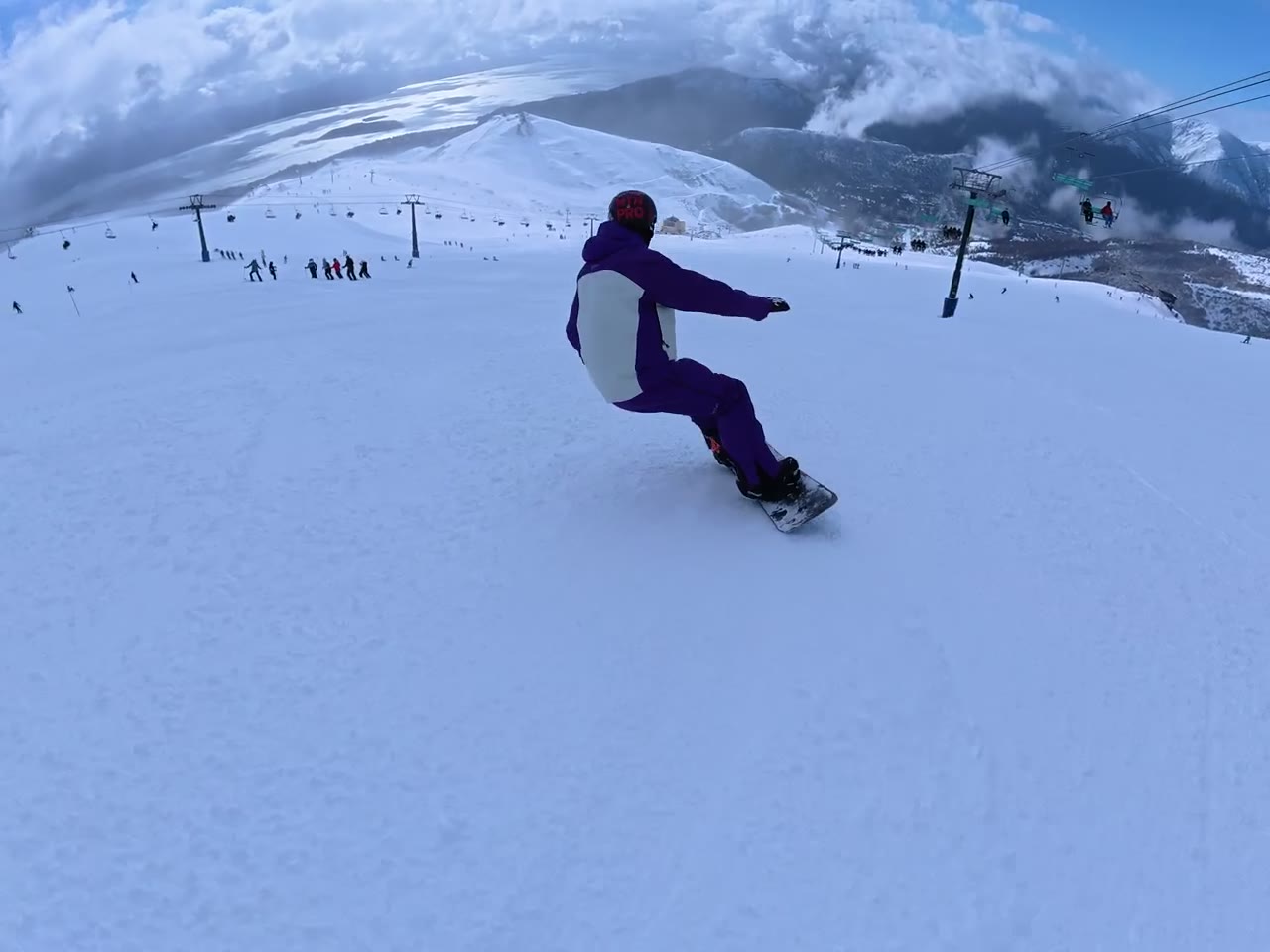
 00:35 / observe
Watch the movement.
Start with the riding itself. Watch how the rider and board move together.
Explore the sample gauges. Tap a title or model for a closer look.
The original Snow Gauge board and rider models. Demo motion is illustrative and independent of the riding video. Body joint positions are modeled.
Two sensors go on the board nose and tail. Additional sensors record motion at selected body positions. This illustration shows the placement concept; modeled body joints are not directly measured positions.
What Foundry covers: start with 3 sensors for the board nose, board tail and one body position, plus your phone on your chest. Choose 6 or 9 sensors to cover additional body positions.
Fore/aft tilt, vertical acceleration, rotation, and side lean each get their own view. The current design uses shoulder and waist guides to make the model easier to read.


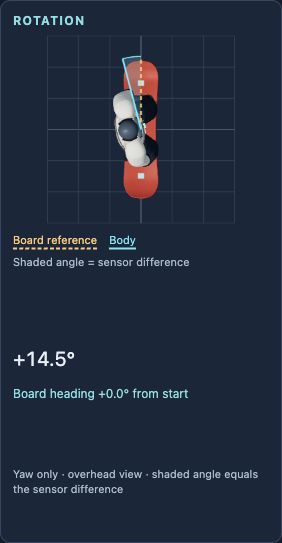


Actual viewer captures · static design preview. Joint positions and centre of mass are modeled, not measured body pose or pressure. Vertical acceleration is not squat depth. Mount and heading validation remain incomplete for this replay.
A deliberate movement sequence with checked camera/sensor timing, plus close-ups of the physically validated mounts. Those shots will replace this labeled production placeholder.
Choose 3, 6 or 9 sensors. From CA$270.
The longer-term goal is to make recorded movement useful to riders and coaches. These stills come from the same field clip. They are visual review prompts, not automatically detected turn phases.
00:35 / observe
Start with the riding itself. Watch how the rider and board move together.
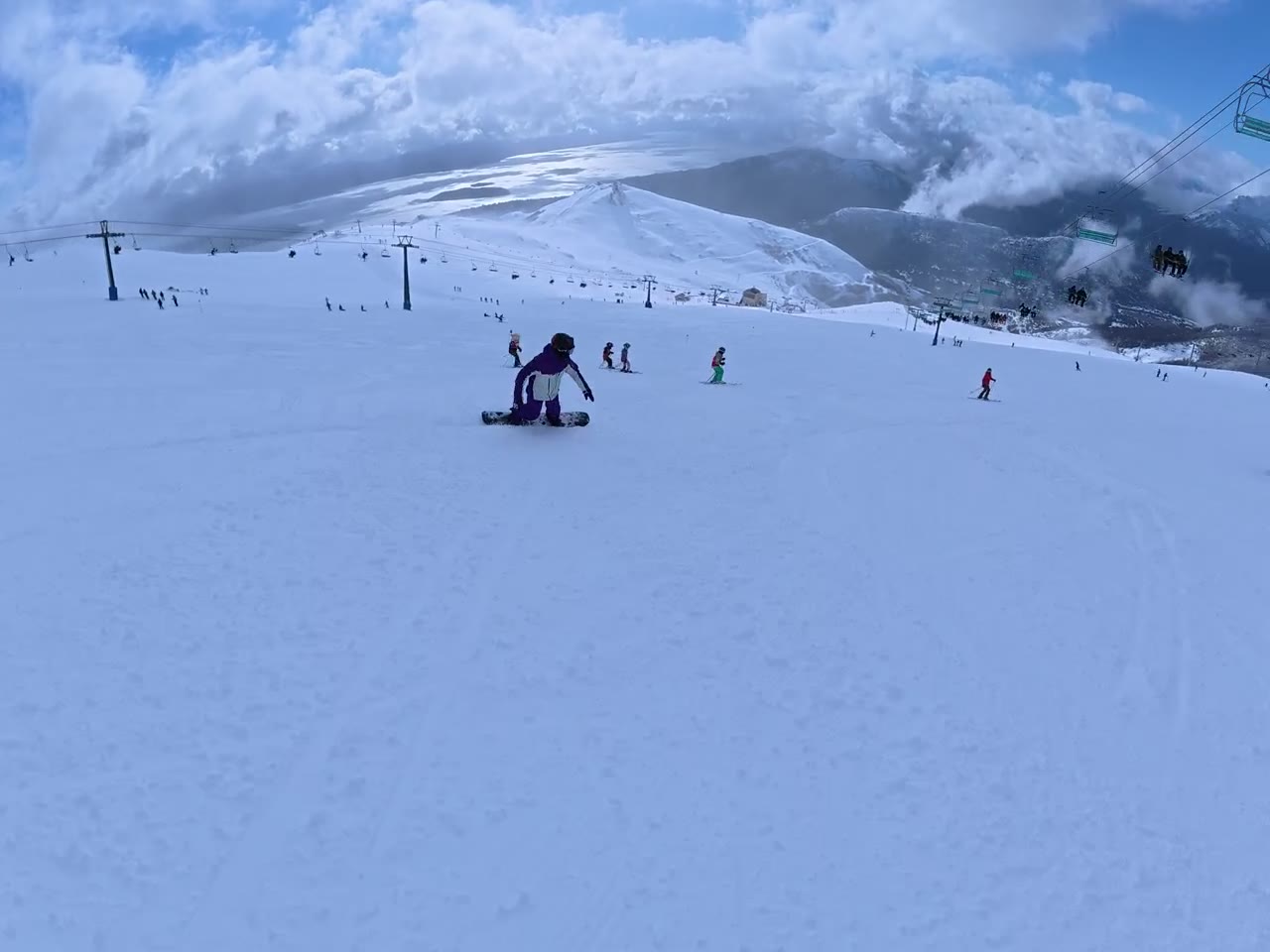 00:41 / compare
Compare the deepest part of the turn across runs, not just the fastest moment.
 00:47 / review
Use video to review the transition, with the context of the whole run.
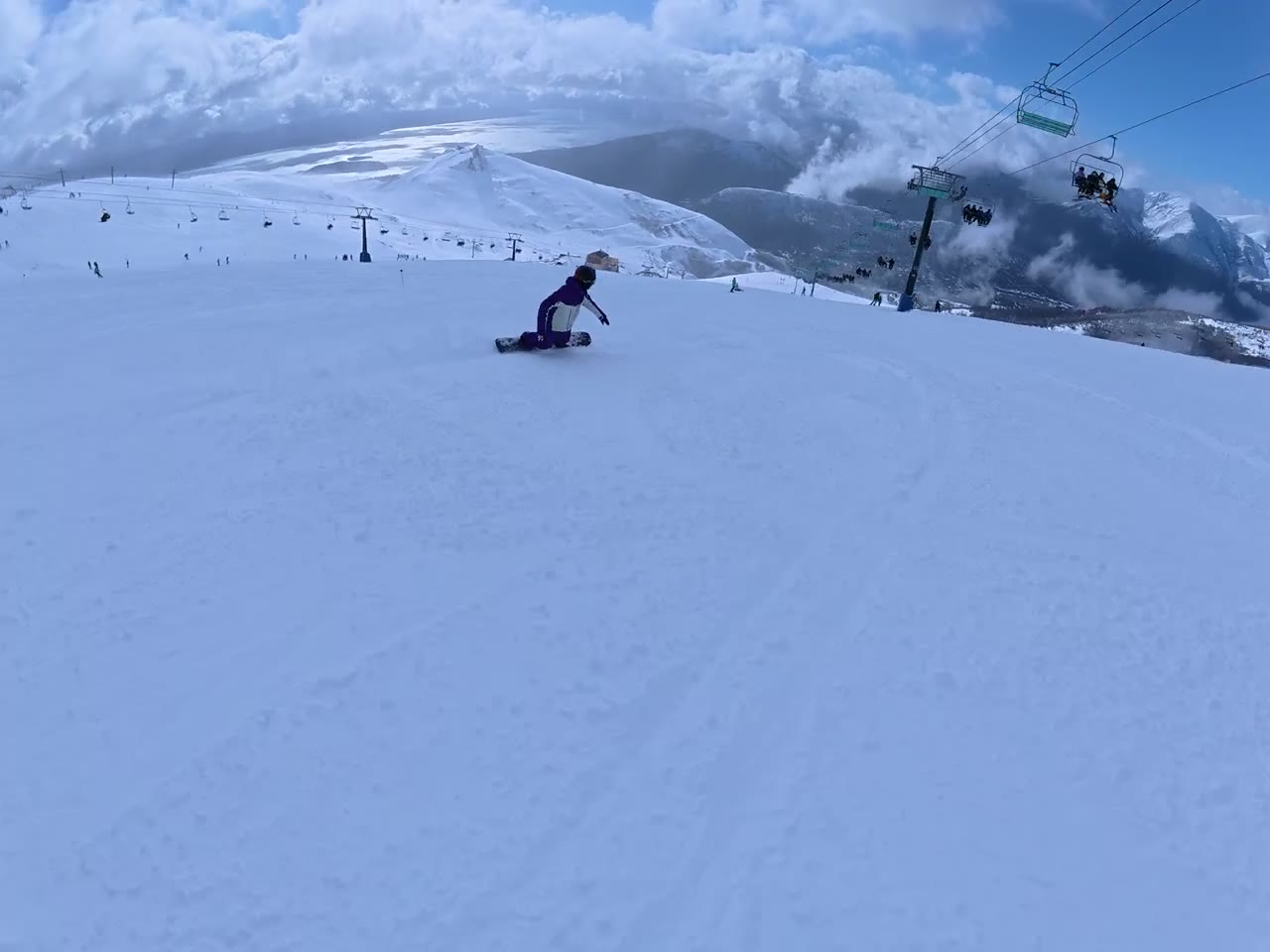 00:53 / repeat
One run tells a story. Repeated turns show the habit worth fixing—and the change worth keeping.
Foundry means joining early. Physical testing, production, and software development still have work ahead. These dates are targets, not delivery commitments.
Physical testing is planned to start September 19, for about a week. Mount approval comes before production.
Updated gauges are targeted for September 2026. App-store submission is still ahead; iOS and Android availability will be confirmed separately.
Snow-user shipping target: November 2026. China production, packaging, and fulfillment follow successful validation. MTB timing depends on mount approval and supplier lead times.
No. Recording and movement review are the foundation being developed. Automated coaching and dependable movement detection are research goals, not promised launch features.
Each base set includes 3 sensors, 3 mounts, 1 charging cable, 4 dust plugs, and 3 × 3M adhesive pads. Choose one, two or three sets shipped together. Software access and final fitting instructions will be confirmed before orders open.
The snow-user target is November 2026. Testing starts September 19, followed by production and packaging if validation succeeds. MTB timing depends on mount approval and supplier lead times. There is no verified arrival date.
No. An invitation discount does not require model-training consent. Optional research permissions are separate and off by default. Read the Privacy Policy for details.
Trackk already has its own account system. You will not need a separate Foundry login. Existing riders can open their Trackk account.
Checkout is in test mode; no real payment or shipment. Foundry sets are final sale, subject to your statutory rights, with a one-year hardware warranty from dispatch. Taxes and import duties will be confirmed before real orders open.
All FAQs: pricing, shipping, setup & data ↗
Still something on your mind? support@trackk.ai
Mountain biking uses the same sensor hardware with different mounts. The MTB experience is in development and is not available to order.